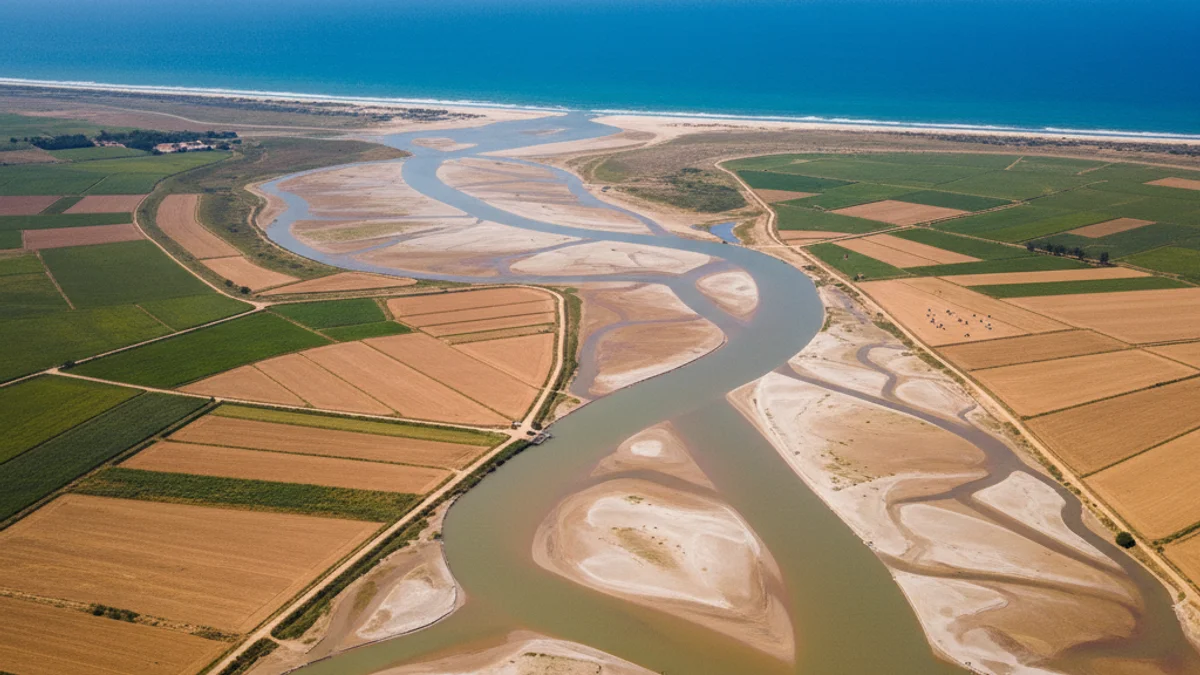
The proposal, already included in the Scheme of Important Topics of the Ebro Plan (ETIS) published in late November by the Ebro Hydrographic Confederation (CHE), suggests decreasing the flow of the central river axis, from Xerta to the sea, from 80 m³/s to 65 m³/s. This reduction aims to secure water allocations for rice cultivation and guarantee the flow to lagoons and bays during the most critical months.
“"From the PDE, we understand the concern of irrigators to guarantee their allocations in drought years like 2023, but we neither understand nor share that securing these allocations should harm other sectors and generate more negative environmental and economic impacts than the current ones."
The PDE warns that this drastic decrease would severely affect shellfish production and fisheries in the bays, due to the reduction of freshwater input. Furthermore, the saline wedge could reach the mouth of the Barranc de la Galera, causing salinization in nearby wells and worsening the closure of the Port de Deltebre outlet to the sea.
The platform also argues that low flows during the warmest period would negatively impact the river's water quality (less oxygen, higher salinity) and its ecological quality, favoring the proliferation of invasive species and the black fly.
For his part, the delegate of the Government in the Terres de l'Ebre, Joan Castor Gonell, described the scenario as “delicate” and admitted the need to integrate irrigators' concessions into the future ecological flow. Nevertheless, Gonell accepts the Consensus Table's approach to dealing with potential new drought episodes, prioritizing water redistribution during critical times.