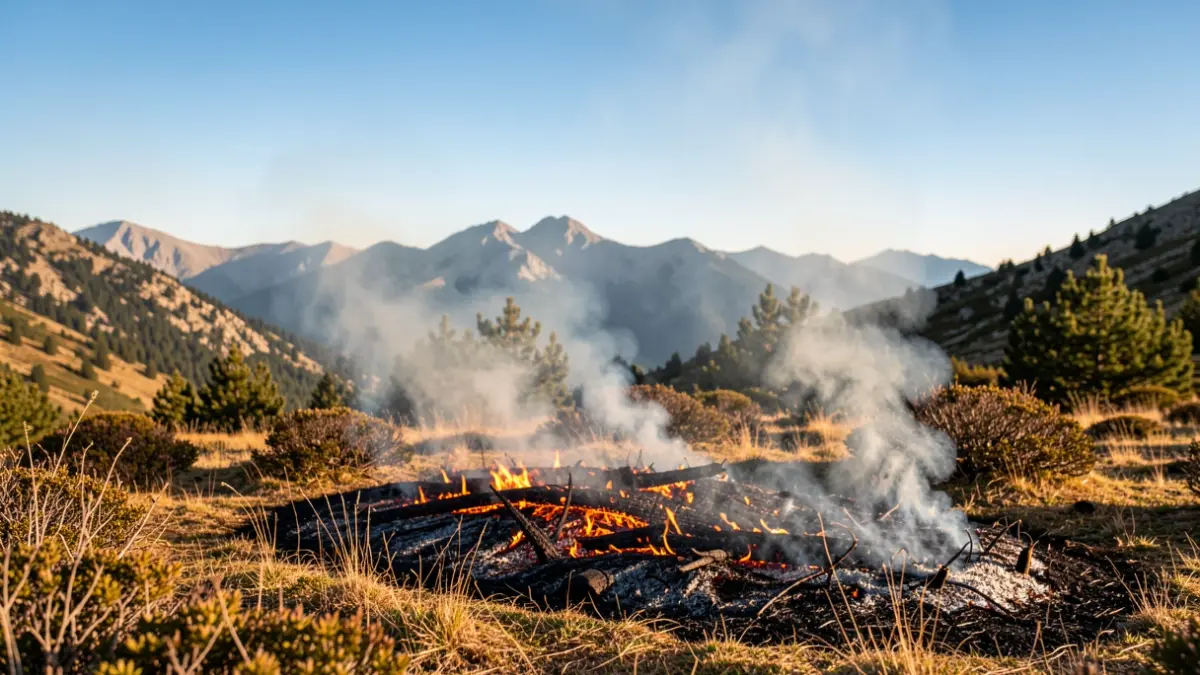
These operations have focused on Pallars Sobirà, Pallars Jussà, Alt Urgell, and Osona. Prescribed burns, primarily carried out during winter under favorable weather conditions, help maintain vegetation cover and promote the growth of tenderer, fresher herbage beneficial for both domestic livestock and game fauna.
The Special Group for Forest Fire Prevention (GEPIF) has executed 32 operations this season, systematically and safely removing dry vegetation and undergrowth. This practice is crucial for improving and maintaining mountain pastures, especially in the Pyrenees, and is also used for phytosanitary actions, promoting biodiversity, or controlling invasive species.
A key objective is to reduce the accumulation of dry vegetation to lessen the intensity of potential forest fires. These burns, requested by farmers, municipalities, or protected natural areas, help keep the territory open, support traditional uses, and shape a more diverse landscape that hinders fire propagation.
In an exceptional intervention, the GEPIF operated in the Gola del Ter, in L'Estartit, to clear accumulated vegetation and debris following a storm. This action, in collaboration with the Parc Natural del Montgrí, les Illes Medes i el Baix Ter, allowed for the controlled removal of large accumulations of material washed downstream by the river.
The Department of Agriculture reminds that fire, when used in a controlled and supervised manner, is a natural element of Mediterranean ecosystems with positive effects on improving habitats, maintaining open spaces, and fostering biodiversity, forming part of an integrated forest management strategy.