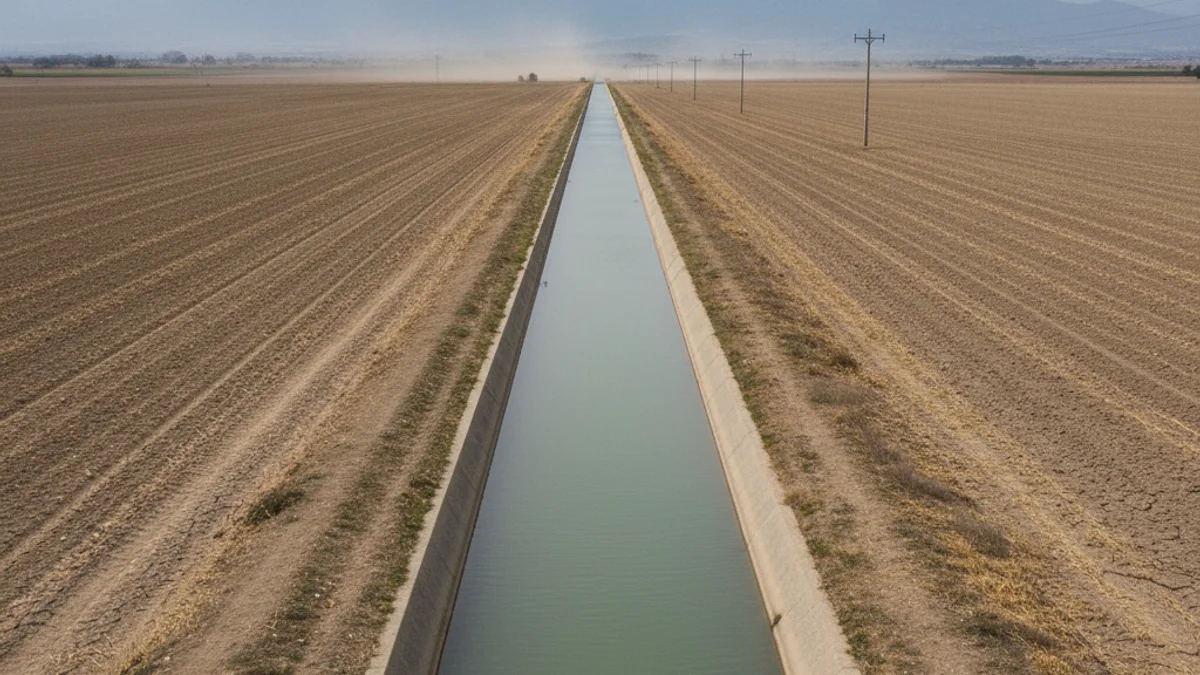
Data from studies and records by the CHE and the Ministry of Agriculture indicate that potential irrigation demands dependent on the Segre river exceed 1,100 cubic hectometers (hm3) annually. This figure contrasts sharply with the less than 750 hm3 that the river provides annually at Rialb. Furthermore, 132.5 hm3 are already allocated to priority uses, such as urban supplies (60 hm3) and ecological flow (72.5 hm3).
The surge in demand is attributed to three main factors. Firstly, the irrigators' rejection of the Canal d’Urgell modernization plan, which would have allowed for an annual saving of 105 hm3. Secondly, the pending development of Segarra-Garrigues up to the planned 79,956 hectares, requiring an additional 322 hm3. Finally, the potential demand from ZEPAs (Special Protection Areas for Birds) in the drylands of Lleida, which could add 90 hm3 more.
“"The technification and increase in irrigation efficiency have been maintained by authorities and water managers as the main measure of adaptation to climate change, creating the false expectation of being able to achieve greater productivity, despite having fewer and fewer available resources."
This scenario of chronic deficit has led the CHE to include a warning in the Scheme of Important Issues (ETI) for the next Ebro Hydrological Plan. The document points out the need to incorporate scenarios of greater efficiency to guarantee the viability of the Segre system. However, a study presented at the Iberian Water Congress identified the “rebound effect” in fourteen modernization projects, including four in the Lleida area, where the increase in effective consumption on plots exceeded the reduction in transport losses.