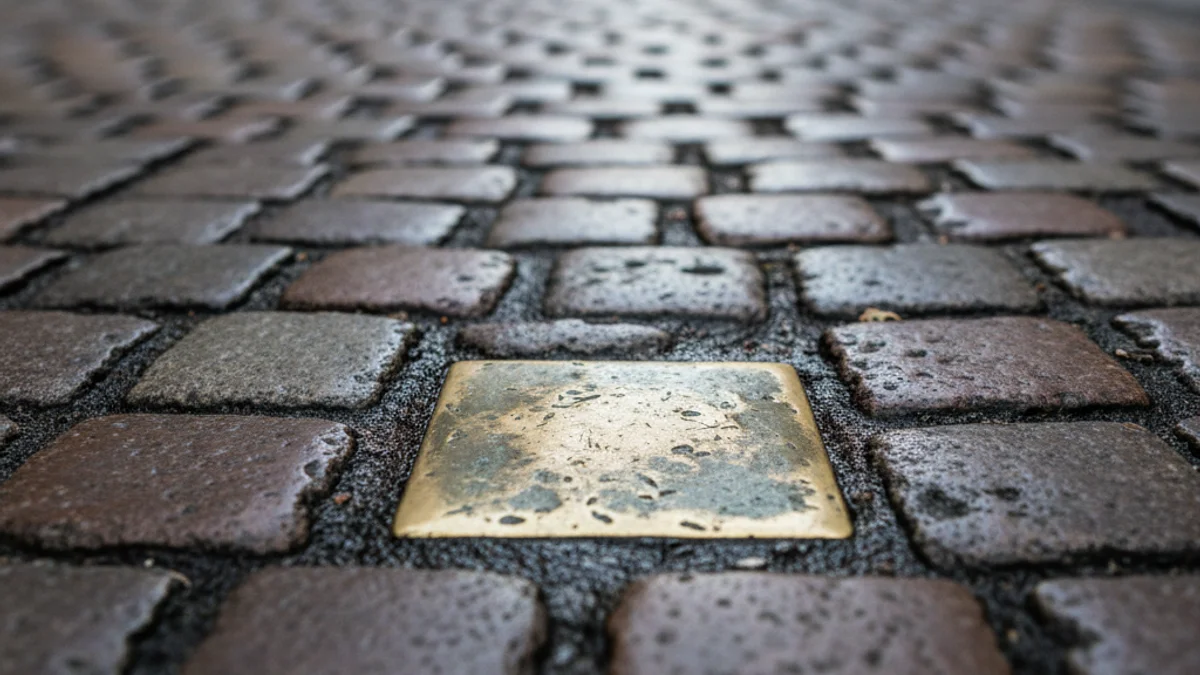
The research paper, carried out by second-year baccalaureate student Ivette Caballol i Colilles, is part of the Stolpersteine placement initiative in Solsonès. This project aims to recover and disseminate the historical memory of the region's Republicans who were deported to Nazi concentration camps during the Second World War.
The investigation focused specifically on the Mauthausen and Gusen camps. To complete it, Caballol combined archival research and historical documentation with interviews with victims' families and historians. This work has allowed for the reconstruction of the harsh trajectories of the deportees from Solsona and highlighted the impact of exile and repression on local history.
The work reveals how, despite decades of silence and oblivion, the memory of the victims of Nazism in Solsonès has been kept alive thanks to the work of committed families and entities.
The most innovative element of the work is the proposal for a memory itinerary through Solsona. This urban route would connect various city spaces linked to the deportees' lives with their personal history, offering a pedagogical and informative perspective to bring these events closer to the public.
This research exemplifies the value of academic work carried out by educational centers. The Stolpersteine project is promoted by the Consell Comarcal del Solsonès, the Centre d’Estudis Lacetans, and the European Observatory on Memories (EUROM) of the Fundació Solidaritat de la Universitat de Barcelona, in collaboration with the Memorial Democràtic and local councils. The student received support from Jordi Guixé, director of EUROM.