The family's intergenerational project, which aimed to plant between 200 and 300 olive trees on the farm located on the Torre del Vent hill in Alt Empordà, was halted upon discovering the reality of the subsoil. The property, whose deed dates back to 1958, had been neglected for years, despite the fact that the ancestors of the Sàlvia and Corcoll families had worked it for generations.
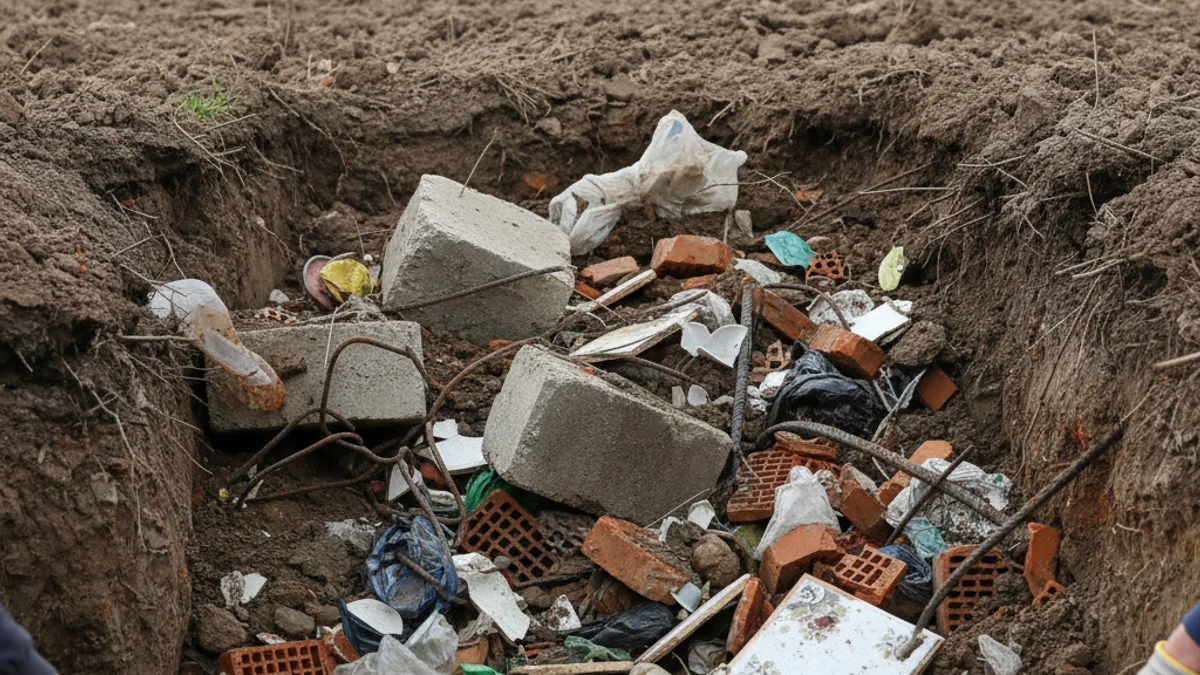
According to the grandson's investigations, Joan Sàlvia, the illegal dumping occurred mainly between the sixties and nineties, coinciding with the major urban boom in the Roses, Santa Margarida, and Empuriabrava area. Earth, rubble, and construction waste were dumped there by "various companies and, according to all indications, also administrations," without the owners' knowledge or authorization.
“"For decades, no one put a stop to a practice that has severely degraded the territory and violated private property rights."
The farm, which is part of the protected area of the Aiguamolls de l’Empordà Natural Park, now features "buried mountains of waste" covered with soil, containing remnants of plastics, scrap metal, and sanitary fixtures. Locals had even nicknamed it "El Corte Inglés" due to the variety of waste found there.
Although the potential crimes have prescribed, the family now faces numerous administrative obstacles to recover the agricultural land, despite the support of the current Palau-saverdera Town Council. Sàlvia laments the paradox between current environmental protection and the impossibility of repairing the damage caused by past urban sprawl.