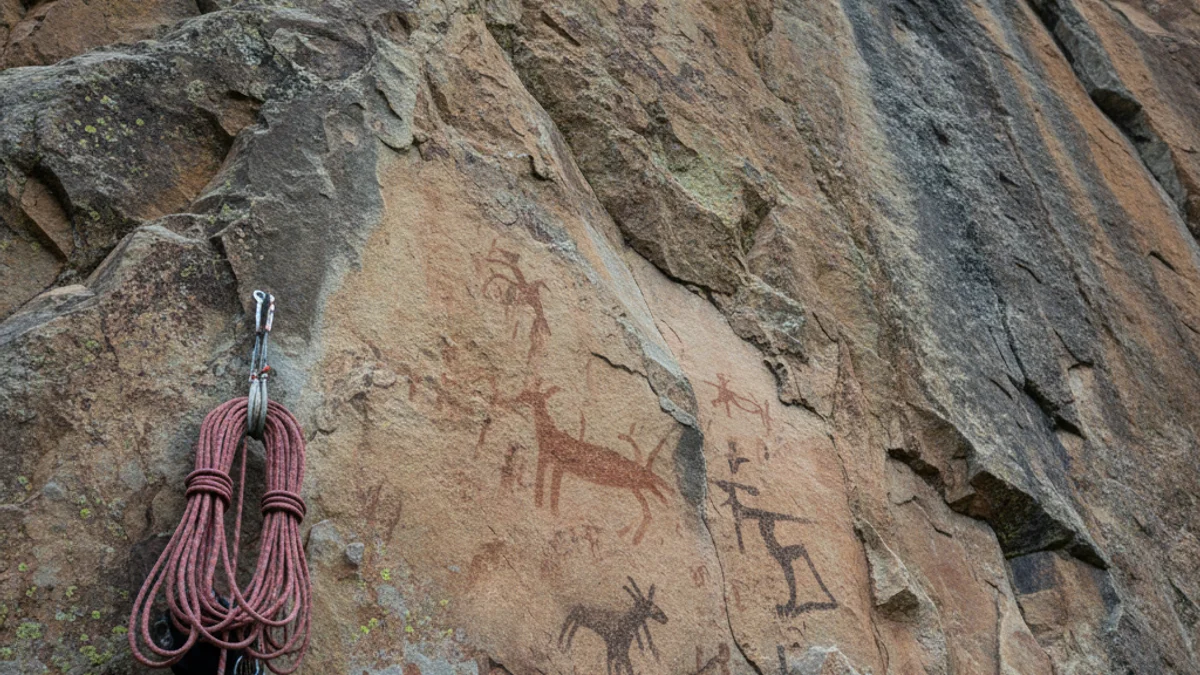
The Peramola council defends the compatibility of climbing with the conservation of the cave paintings and other sites in the Roc del Rombau area, a practice that has been carried out until now. The new protection zone, published in the Diari Oficial de la Generalitat de Catalunya (DOGC) last month, covers 36 hectares and prohibits sports activities such as climbing, in addition to camping and making fires.
This high level of restriction has caused uncertainty among the council and users, as the document does not precisely detail the area of application. Mayor Joan Puig has voiced concern, stating the measure could affect climbing routes deemed "important" for the economic revitalization and promotion of the municipality, which is a globally recognized climbing center.
“"The delimitation of the protection environment applied to Roc de Rombau is very restrictive, to the point that it could affect some climbing routes considered important."
The cave paintings, recognized as a National Cultural Asset of Interest (BCIN) and part of the UNESCO World Heritage List since 1998, are located six meters high on the vertical wall. Catalan law considers rock art "inseparable from its landscape environment." The council plans to meet with Culture technicians soon to understand the criteria and seek possible exceptions.
Regular climbers defend their coexistence with the heritage. Daniel Forgeng, a resident of Coll de Nargó, and Ivan Cercós, from Solsona, emphasized that the community has always been respectful and that their presence has actually contributed to the protection of the paintings against potential vandalism.