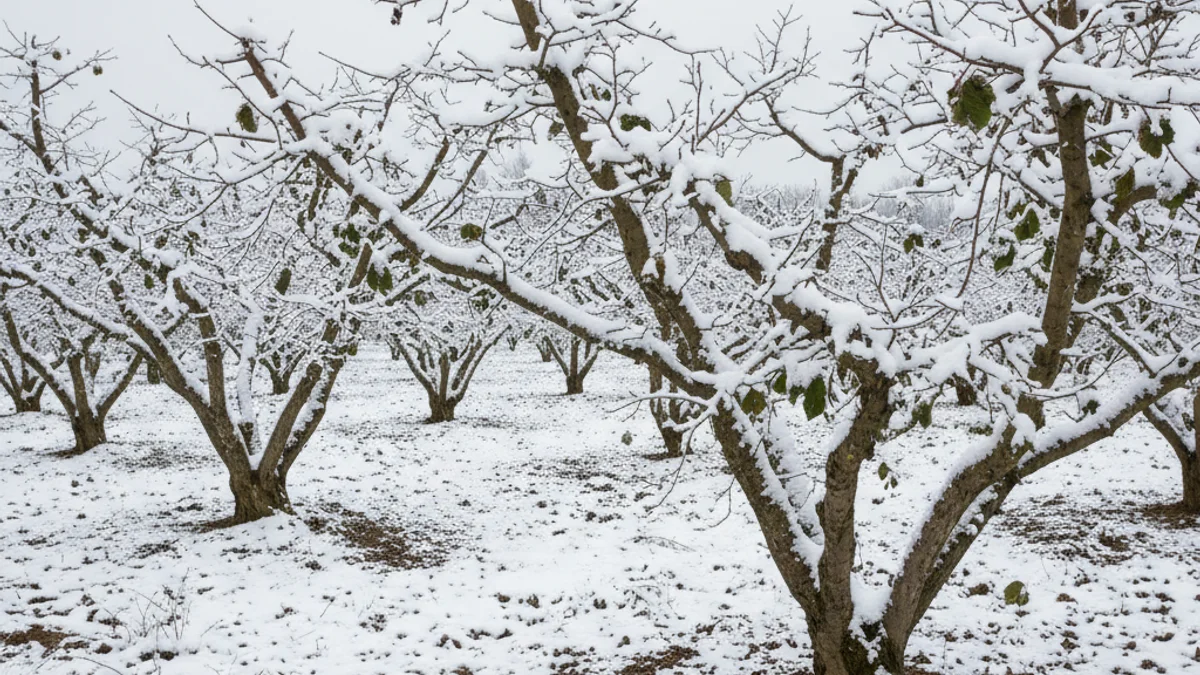
The agricultural union Unió de Pagesos, through its territorial coordinator in Camp de Tarragona, Sergi Claramunt, positively assessed the snow episode that affected regions such as Conca de Barberà and Priorat. According to Claramunt, snow is "perfect" for trees like hazelnut, almond, vine, and carob, as it melts slowly and provides highly beneficial moisture.
“"It seems we have to beg for charity to be paid the right price for our product. Then, you find that people go shopping and say that fruit and vegetables are expensive, but we are not paid that price. The problem is that there are many intermediaries."
Despite the benefits for woody crops, Claramunt warned that the excessive cold, with sub-zero temperatures in places like Prades, could have "roasted" recently sprouted seedlings. However, he insisted on the need to accumulate more cold hours during winter, as hazelnut trees require about 400 hours to rest and ensure a strong harvest in the spring.
In the context of sector demands, Unió de Pagesos supports the Revolta Pagesa mobilizations against the EU-Mercosur Treaty. Furthermore, the union has called for a burning of hazelnut trees in Riudoms on January 19 to denounce the lack of water in the territory and demand speed in the works of the regenerated water plant at the Reus treatment facility.