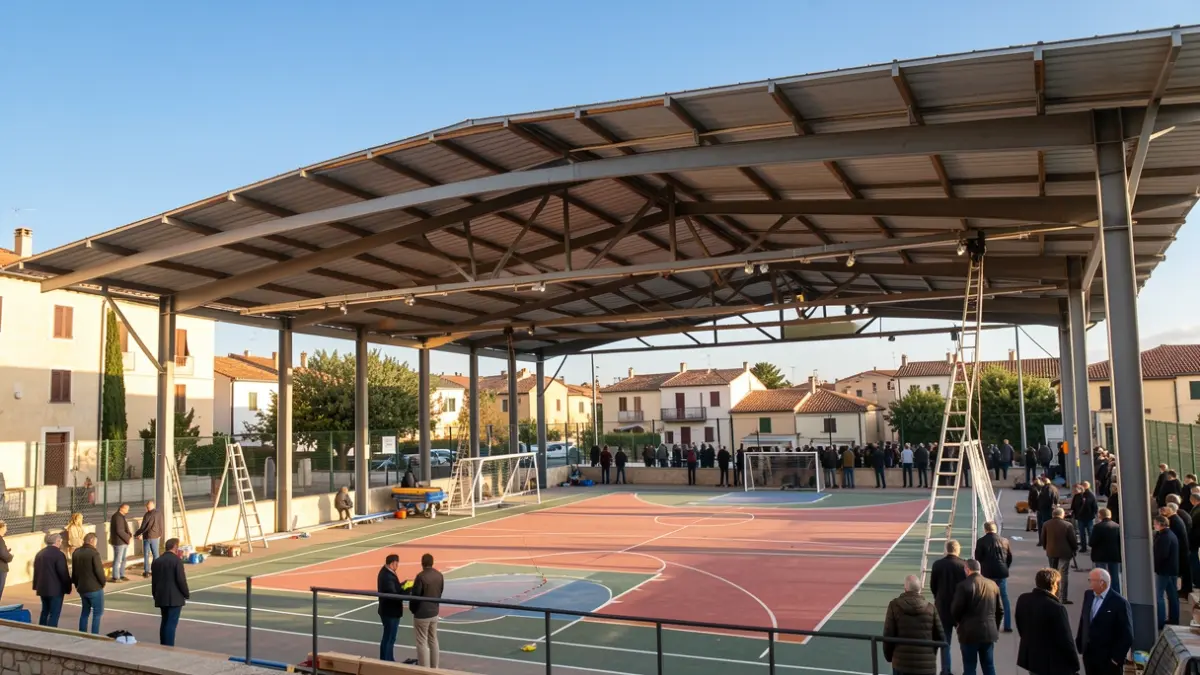
The first phase of the Xerta-Sénia canal irrigation has been underway since June last year in the municipalities of Xerta and Aldover. Current efforts are focused on neighboring Roquetes, where over 400 hectares have already been committed, representing about a third of the total planned surface area in the municipality (around 1,100 hectares).
“"People already see it as real, and the number of hectares is increasing. It is like an embryo that is now born and will not stop growing."
The new President of the Irrigation Community, Domingo Espuny, announced that the start of the second phase works in Roquetes, which will irrigate olive and citrus groves, could begin in the first quarter of 2026. To streamline registrations, the Roquetes City Council will contribute 20,000 euros to hire administrative support staff, according to the agreement signed with local irrigators.
“"It will represent a significant economic boost because this can cause an agrarian transformation of the territory, and this will also mean, if there is a change and improvement in crops, more economic activity and perhaps finding a generational replacement for farmers."
The overall Xerta-Sénia canal project plans to irrigate 16,000 hectares in the interior plains of Baix Ebre and Montsià. Over the last two and a half decades, more than 150 million euros of public funds have been invested, despite the project being historically flagged by the Platform in Defense of the Ebro as a risk for a potential river transfer.