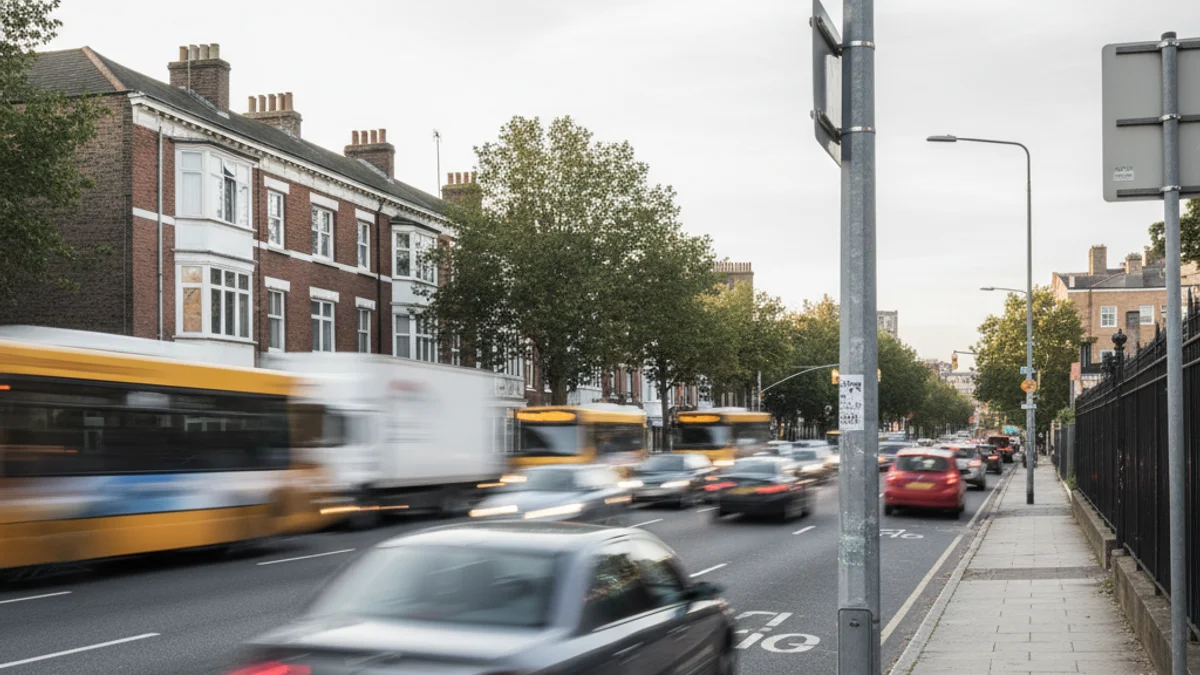
Of the four sanctioning devices, two have a maximum limit of 30 km/h: the one on Pedret street, near number 146, and the one on Josep Tarradellas avenue, in front of the Maristes school. The other two cameras, limited to 40 km/h, are located on Riu Güell street, in the Sant Narcís neighborhood, and at the intersection of Barcelona street and Creu street. These points were historically 50 km/h zones but were adapted to new urban limits for safety and reduced pollution.
The cameras accumulating the most fines are those at Pedret and Maristes (30 km/h), which account for almost half of the total sanctions. For instance, the Pedret camera registered 567 sanctions in just one week at the end of November. However, data shows a downward trend, as sanctions at this point decreased to 399 between December 8 and 14.
“"These are areas where accidents occurred, sensitive environments like the Pedret civic center or the Maristes school, and since the cameras were installed, we have no record of any significant accidents in these zones."
The City Council is not considering modifying the 30 km/h limits, especially in the Maristes section, as it is the exit of an educational center with high movement of families. Councillor Isaac Sánchez insists that “Citizens must get used to the fact that 50 km/h speeds are no longer common within the city. Now we are talking about roads of 20, 30 or 40 km/h, at most”.
Speeding fines are classified as serious or very serious and range between 100 and 600 euros, potentially leading to the loss of driving license points. On roads limited to 30 km/h, points are lost starting at 50 km/h (considering the margin of error).