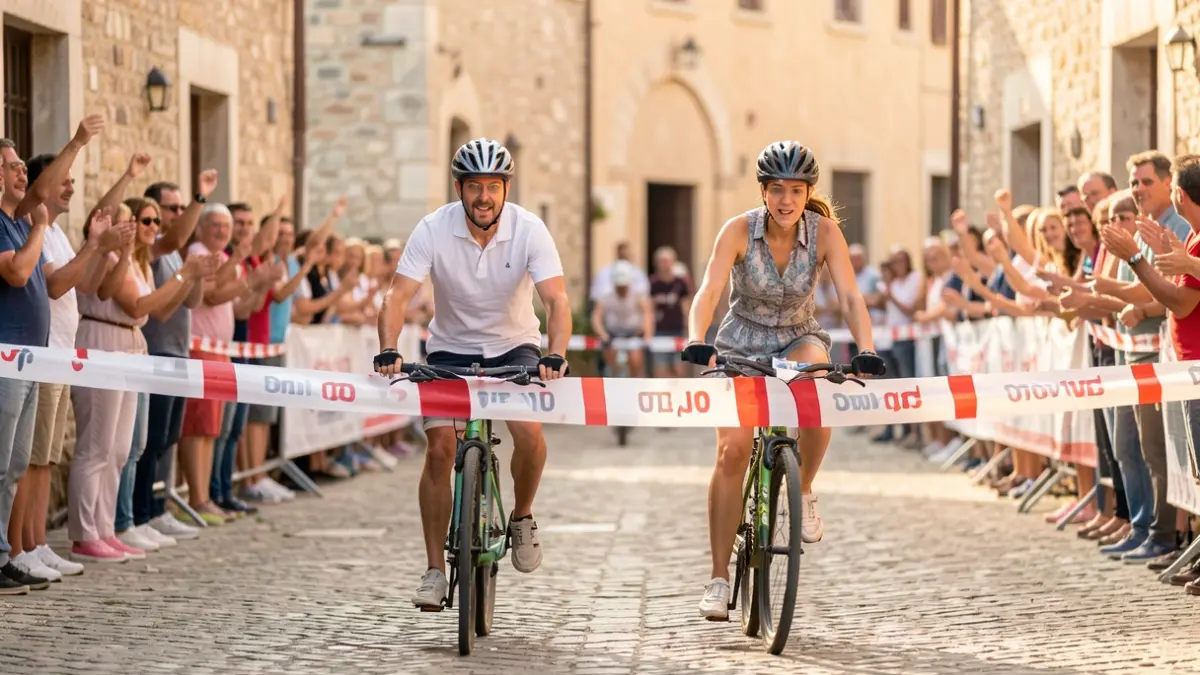
The first three stages of the 2026 Tour de France, known as the Grand Départ, will cover a total of 397.4 kilometers across Catalan territory, passing through about sixty municipalities and twelve regions (comarques). These stages will include 15 ascents and an accumulated positive elevation gain of 6,650 meters, as detailed during the presentation event held at the Palau de Pedralbes.
“"We will be the center of the world. It is the biggest thing that has happened in the city since the time of Augustus."
The second stage, scheduled for July 5, will start in Tarragona and finish in Barcelona. This 178.4-kilometer route will pass through ten municipalities in the Camp de Tarragona area, including Altafulla, Torredembarra, Roda de Berà, el Vendrell, Calafell, and Cunit. The Mayor of Tarragona, Rubén Viñuales, emphasized that the event will be a source of collective pride and global projection for the city's image.
The first stage, on July 4, will be a 19.7-kilometer team time trial starting on the beach in Barcelona and featuring a demanding finish at Montjuïc Castle. The third stage, on July 6, will start in Granollers and conclude at the Les Angles station in Capcir (France), covering 196 kilometers and including the climb up the Collada de Toses.
The Minister of Sports, Berni Álvarez, highlighted that the Tour will leave an economic, social, and environmental legacy, while President Illa argued that choosing Catalonia shows that “the world trusts” its capacity to host major international events.