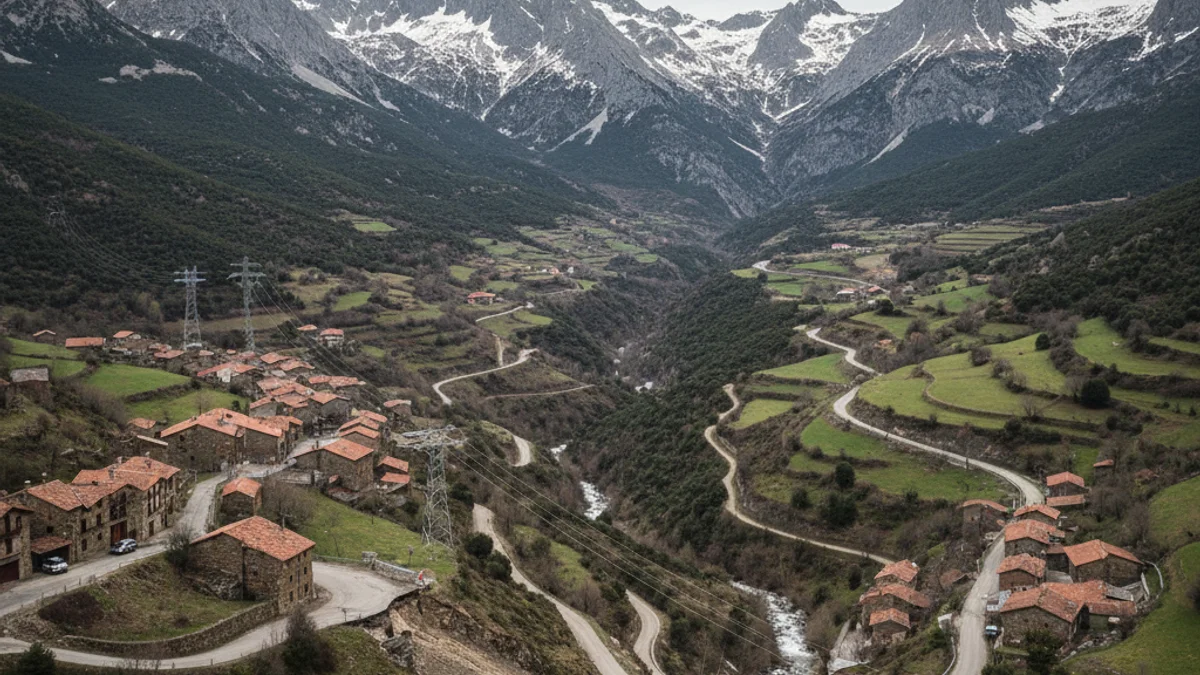
The public information process started this Thursday and will remain open for one month, allowing entities and citizens to submit allegations to the draft bill. The new regulation aims to address the new economic, social, environmental, and institutional challenges affecting mountain territories. The territorial scope of the law includes the Aran Valley and the regions of Alt Urgell, Cerdanya, Alta Ribagorça, Pallars Sobirà, Pallars Jussà, Solsonès, Berguedà, and Ripollès.
This set of territories encompasses 144 municipalities, representing 28.3% of Catalonia's surface area. The Minister of Territory, Housing, and Ecological Transition, Sílvia Paneque, explained from the Aran Valley that the draft bill had already undergone a first citizen consultation in 2024, where 31 contributions were received.
The law provides for the creation of key instruments for territorial management, such as a Strategic Action Plan valid for six years, which will include projects receiving public funding. A Technical Office of the High Mountain will also be created to bring management closer to the territory, and the General Council of the High Mountain will be reformulated, transforming it from a consultative body into one of participation and decision.
The specificities and associated challenges of mountain territories continue to necessitate public intervention with positive discrimination policies, comprehensive and adjusted to their territorial reality.
The Strategic Action Plan will feature a specific section for areas requiring special attention due to their distance from economic centers, including Alt Urgell, Aran, Alta Ribagorça, Cerdanya, Pallars Jussà, and Pallars Sobirà. Conversely, the Garrotxa region has been excluded from the high mountain scope as it is considered not to meet the physical criteria, although it will retain some benefits derived from the legislative deployment.