The works, framed within the Catalonia Green Infrastructure Program, focused on improving ecological connectivity in the Marmellar, Estalella, and Estalleta streams, and the Cal Biel and La Bruixa ravines. These waterways cross the municipalities of L’Arboç, Banyeres del Penedès, Castellet i la Gornal, Castellví de la Marca, and Santa Margarida i els Monjos.
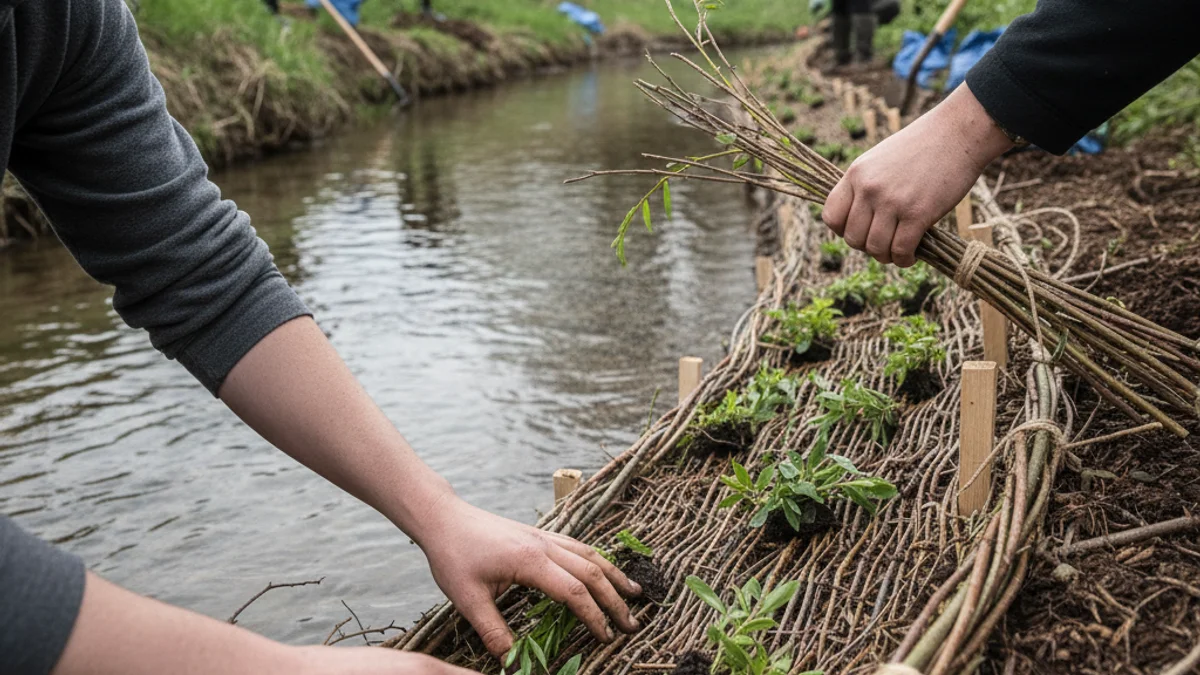
The main tasks included the removal of invasive American reeds, the adaptation of slopes using bioengineering techniques, and the replanting of native riparian species. Furthermore, a 270-meter path very close to the Marmellar stream was eliminated, and debris and concrete remains were cleared from the riverbed.
One of the most notable actions took place at the Marmellar stream, at the crossing with the railway line, where a two-meter diameter pipe was installed beneath the path. This infrastructure is crucial for facilitating water circulation and significantly reducing the risk of flooding in the area.
This project aligns with the recently approved European Nature Restoration Law, which sets the goal of recovering 20% of the European Union's degraded ecosystems before 2030. The regulatory framework emphasizes the importance of removing barriers to foster more resilient ecosystems.
The Director General of Environmental Policies and Natural Environment, Marc Vilahur, supervised the results of these works during a visit conducted this Thursday, confirming the success of the 874,061 euro investment, funded through the European Next Generation funds within the Recovery, Transformation and Resilience Plan.