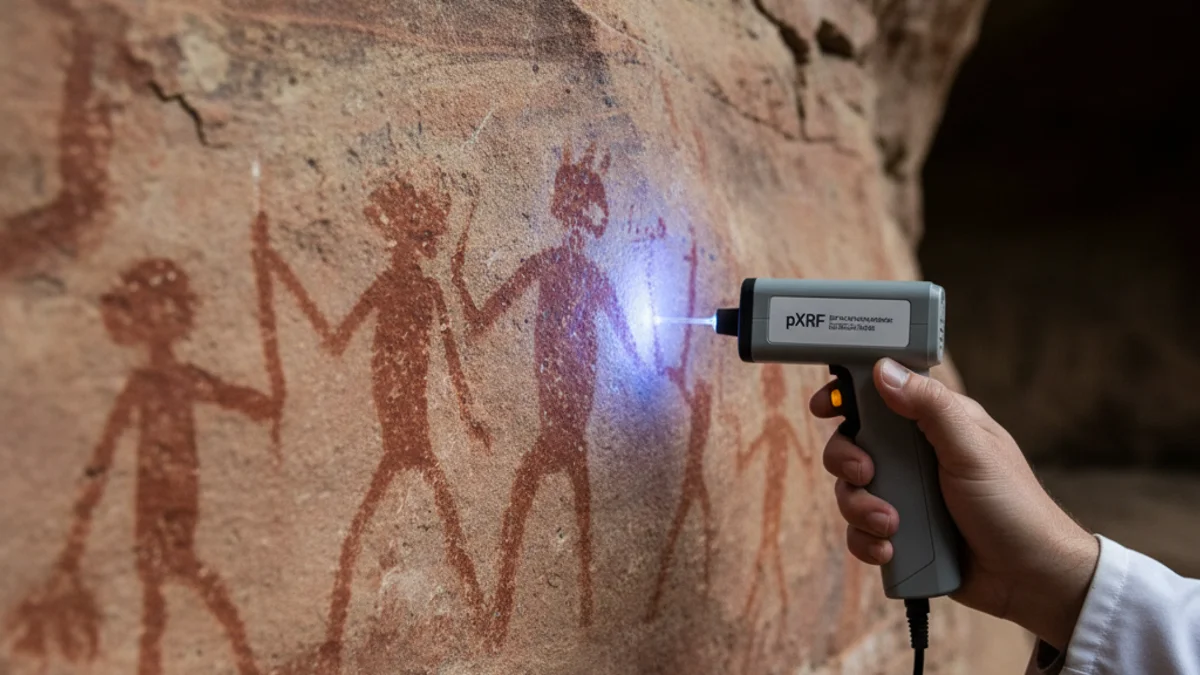
The study, published in the journals Journal or Archaeological Science Reports and Journal of Cultural Heritage, highlights the link between the composition of the red pigment (made with binders such as milk or animal fat) and the different stages of Mediterranean rock art.
Researchers from the UV group ArchaeChemis, Gianni Gallello and Mirco Ramacciotti, explained that using a low-cost tool allows identifying differences in pictorial motifs and paint degradation, serving as a selection method before more complex analyses.
“"This technique opens new avenues to redefine the stylistic horizons of Mediterranean rock art."
This analysis, which used colorimetric data captured by the smartphone, confirmed three stylistic variants in the Cocó de la Gralla shelter, validated through the non-invasive analytical approach. The research is supported by the Archaeological and Paleontological Heritage Service of the Generalitat de Catalunya.