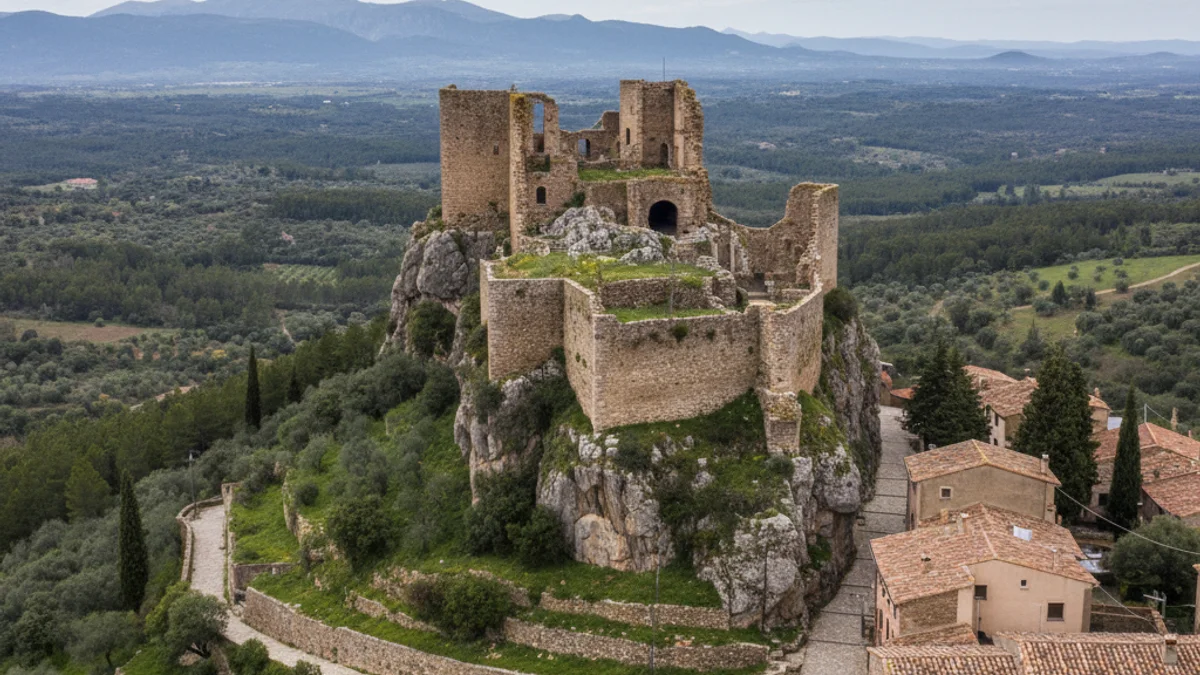
The history of Alòs de Balaguer, likely of pre-Roman origin, dates back to the Paleolithic era, according to archaeological findings. Its most notable monument is the castle, popularly known as “la Carlana”, documented since the year 1018. This fortress, of Andalusian origin, was owned by Bishop Eribald d'Urgell and, later, by the Monastery of Santa Maria de les Avellanes.
The Alòs bridge was strategically crucial during the War of the Reapers, when D'Harcourt seized it to inflict a major defeat on the Castilian army.
The town was known as Alòs del Marquesat, as King Philip V created the Marquisate of Alòs in favor of the Bourbon military officer Antoni d'Alòs i de Rius, following the fall of Barcelona in 1714. Administratively, it served as a vegueria of Lleida until 1716 and a corregimiento until 1833.
The parish church of Sant Feliu, situated on the hillside, houses two remarkable polychrome stone altarpieces from the 14th and 15th centuries. These altarpieces, dedicated to Sant Feliu and the Mare de Déu del Roser and Sant Pere Màrtir, testify to the town's economic splendor during the 14th century.
Alòs de Balaguer is part of the tourist route of Artesa and the Coma de Meià, which allows visitors to discover other castles such as Montsonís and Montclar, as well as the impressive Romanesque monuments of Cubells and Vilanova de Meià.