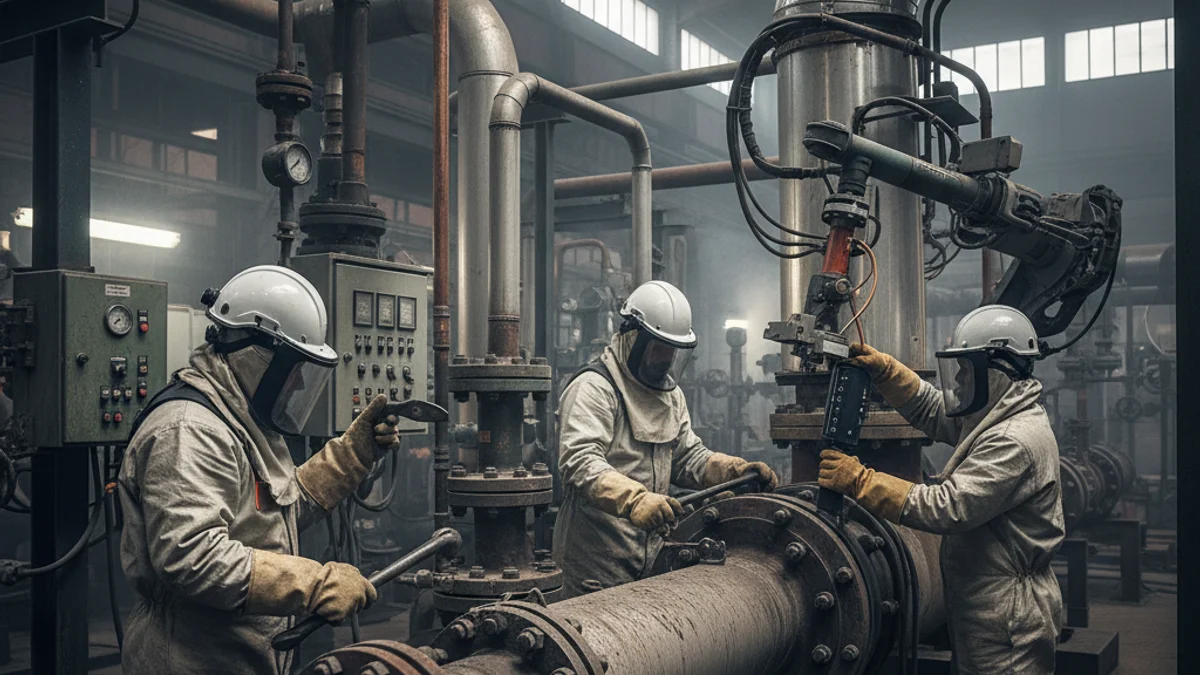
The company is currently carrying out works at the IRTA-CReSA facility, a high-security laboratory from which the African Swine Fever (ASF) virus may have originated. Although the cause of the leak is unknown, Rogasa's works had been ongoing for three months, and the laboratory did not confirm whether a biosecurity lapse caused by the construction could be the source of the outbreak.
This is not the first time the family construction firm has been embroiled in controversy over “poor practice.” This year, the High Court of Justice of Castilla y León penalized Rogasa with 590,000 euros for deficiencies found in the delivery of the CIDE building in Segovia. The work, initially tendered in 2018 for nearly three million euros, accumulated delays and was rejected by the City Council for not meeting adequate conditions.
The link to the 3% scheme is one of the most notorious episodes involving the construction company in Catalonia, marking its trajectory for years.
Within the judicial investigation into the alleged irregular financing of Convergència Democràtica de Catalunya (CDC), Rogasa and its subsidiary Rehac are listed as recipients of public contracts under suspicion. The company's president, Juan Luis Romero Gamero, was arrested in October 2015 in an operation coordinated by the Guardia Civil and the Anti-Corruption Prosecutor's Office. Despite the opening of oral proceedings, there is still no final sentence condemning the businessman or the Rogasa group.
Another controversial project was the Glòries Tunnel in Barcelona. The contract was awarded to Rogasa and a consortium of companies in February 2015, shortly before municipal elections, during the mandate of Mayor Xavier Trias (CDC), with a budget of 60 million euros. The work accumulated a cost overrun of 60% and was rescinded by Ada Colau's team in April 2017, with the project finally completed years later, in 2021.