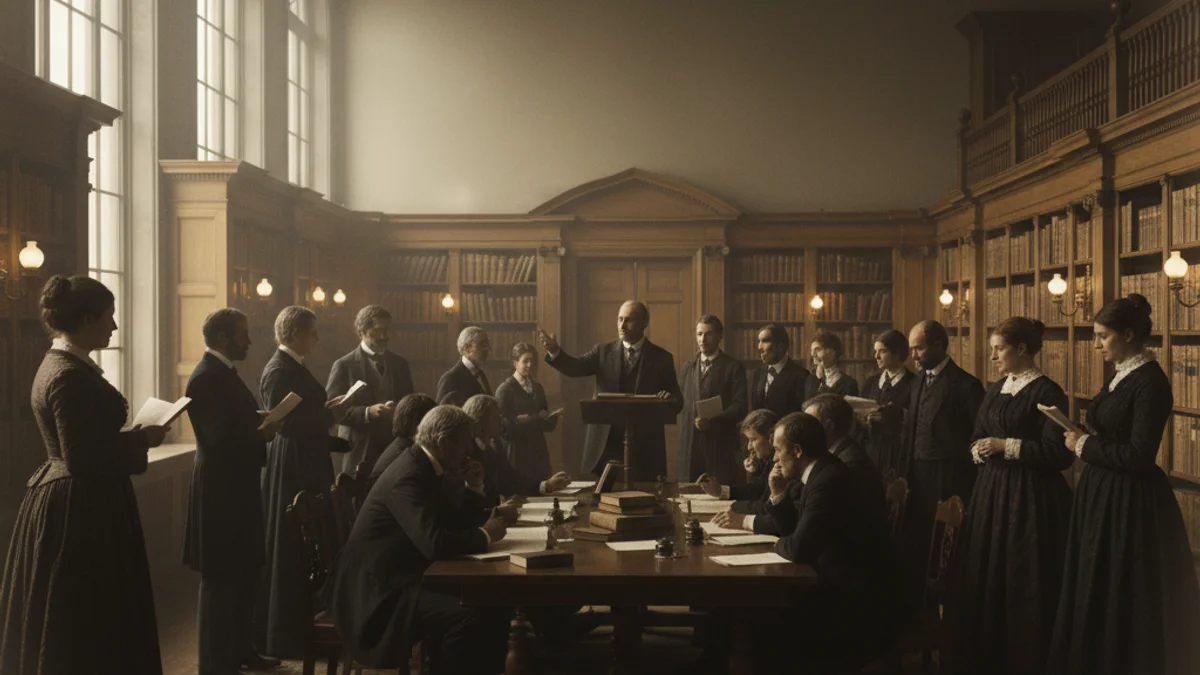
Starting in the 19th century, the economic, political, and religious power, along with its absolute truths, began to be openly questioned, giving way to heterodox positions. The ruling power bloc, composed of the oligarchy (financiers, industrial bourgeoisie, and large rural landowners), the Monarchy, and the Catholic hierarchy, established the official orthodoxy and social normality.
Positioning oneself outside this official version created a broad space of complicity among highly diverse groups. These dissidents included Masons, Republicans, Protestants, freethinkers, anarchists, feminists, socialists, and anti-militarists. Multiple and simultaneous militancy was common, sharing a final desire for emancipation against the uniformity and rigidity imposed by the power.
The traditional anti-clericalism of the Republicans favored the rapprochement with Protestantism, which was seen as a symbol of progress and modernity compared to Catholic immobility. Figures such as the trade unionist and teacher Isabel Vila or the Maó pastor Francesc Tudurí de la Torre, who was simultaneously the local head of the Republican Party and a 33rd-degree Mason, exemplify this ideological convergence.
This critical ferment, which was particularly active in large cities like Barcelona, Palma, and València, had secularism (laïcitat) as a common reference. Shared demands included the defense of freedom of conscience and worship, civil and political equality, the secularization of cemeteries, and the abolition of religious oaths in civil acts. For further reading, consult the work Història del protestantisme als Països Catalans (Josep-Lluís Carod-Rovira, 2016), which documents the roots and influence of these confessions.